Why Did the Crusades Happen Why Did the Crusades Begin Again
What were the Crusades?
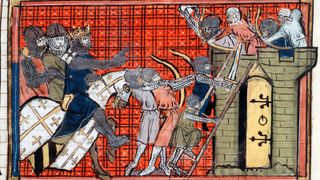
The Crusades were a series of religious wars initiated in 1095 by the Roman Cosmic Church. They continued, in various forms, for centuries. The well-nigh well-known Crusades took place between 1095 and 1291 in the Near East, where European Christian armies attempted to recover the city of Jerusalem from Islamic rule.
There were other Crusades against Muslims in Iberia and against pagans and fellow Christians in Europe whom the Catholic Church building deemed heretical. After the First Crusade (1095-1099) was launched by Pope Urban II, the big areas of the Holy Land were occupied past European Crusader States, as well as armed forces orders such every bit the Knights Templar. By the end of the 18th century the Crusades had all only ended, leaving Europe and the Near East forever changed.
When were the Crusades?
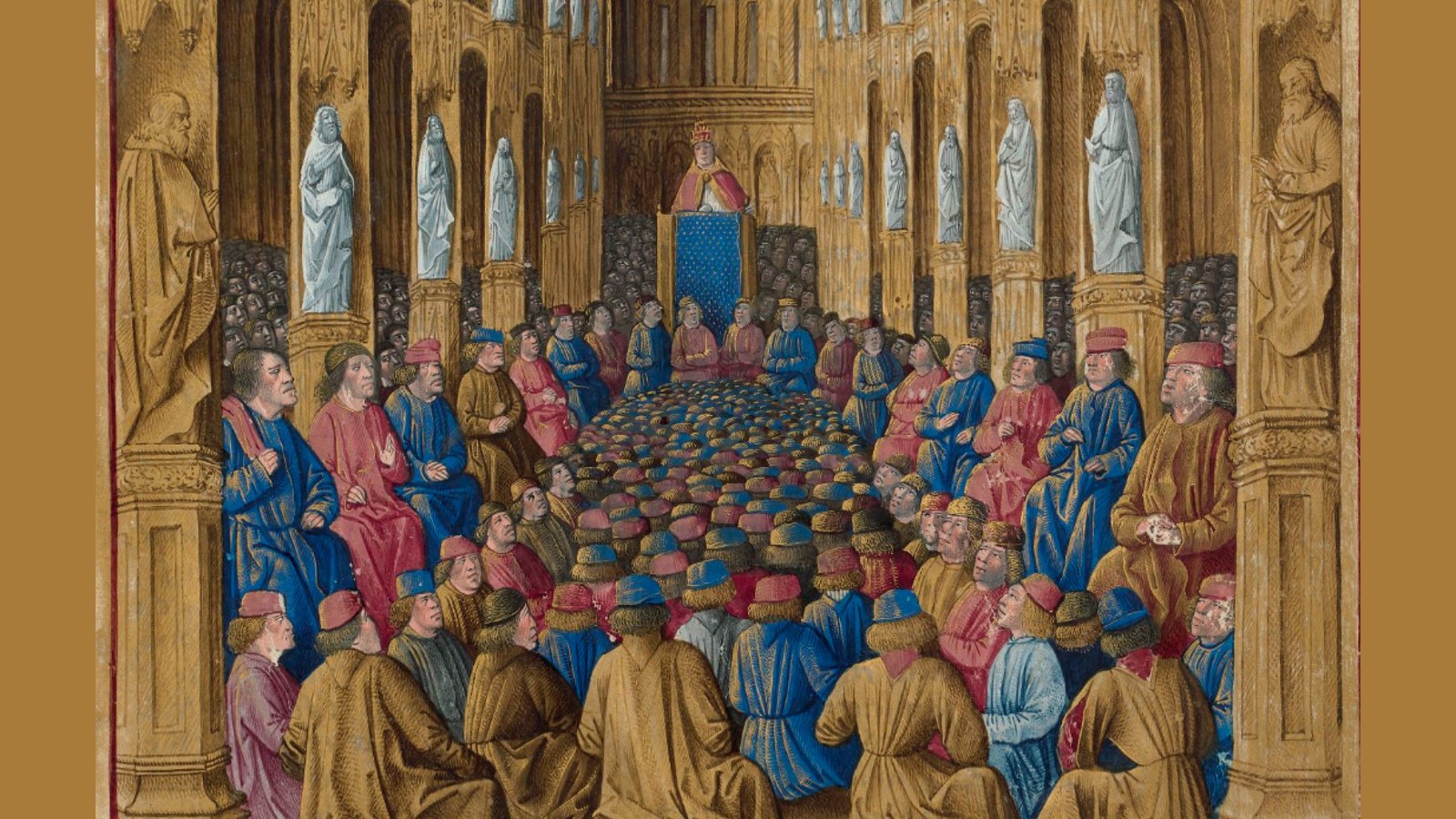
The Crusades began in November 1095, at the Council of Clermont in French republic, Nicholas Morton, senior lecturer at Nottingham Trent University, and author of "The Teutonic Knights in the Holy Land, 1190-1291" (Boydell, 2009), told Alive Science in an email.
"During this council, Pope Urban Two gave his famous voice communication, launching the Commencement Cause, thereby marking the beginning of the crusading movement," Morton wrote. "It is very rare for historians to seriously suggest an earlier date, and yet many scholars observe that features which quickly became intrinsic to crusading (such every bit papal authorisations for warfare) do announced in earlier years."
Conversely, the Crusades did not necessarily conclude in the late 13th century. "Over the centuries, crusading fluctuated in popularity across Western Christendom, but information technology remained a characteristic of life for a very long fourth dimension indeed," Morton wrote.
The late Jonathan Riley-Smith, a famous historian of the Crusades, has demonstrated that the papacy'southward willingness to initiate crusading campaigns began to refuse in the 17th century; even so, Riley-Smith pointed out, aspects of the crusading movement persisted into later centuries.
Related: Who were the Knights Templar?
The Knights Hospitaller — a military religious order of the Church and a product of the crusading movement — connected to defend Malta until 1798, and some military orders participated in military machine activities in after years," Riley-Smith said.
How many crusades were at that place?
Several Crusades took place between the 11th and 13th centuries, just the precise number is still debated amongst historians. "Historians are generally pretty consistent in numbering 5 of the largest crusading campaigns to the Eastern Mediterranean, using terms such as 'First Crusade', '2d Crusade,' etc," Morton wrote.
"The problem is that this numbering system is not comprehensive and nor was it used past contemporaries. During the Showtime Crusade, which lasted from 1095 to 1099, European Christian armies defeated Jerusalem and established the Crusader States. Later the Fifth Crusade, some modern historians place some crusades in the later 13th century by using labels such equally the Sixth, 7th and Eighth crusades. However, there is less consistency here."
How exercise nosotros define the Crusades?
Morton claims information technology is difficult to define exactly what a crusade was. "Neither the papacy nor anyone else referred to the earliest Crusades as such. At the time, writers sometimes described crusaders equally 'crucesignati' — meaning 'persons marked by the sign of the cross' — but at other times, they described them using other terms such as 'pilgrim'. Crusading also evolved over time, taking on many different forms and operating in many dissimilar geographical areas — which all complicates making any easy definition," he wrote.
There are several key features that help historians to define crusading campaigns. "In lodge to be considered an actual 'Cause', the campaign had to be endorsed past the pope. In add-on, a true Crusader took a crusading vow and then sewed a cantankerous onto their clothing to symbolize their delivery. They also wore symbols traditionally associated with pilgrimages — such every bit a pilgrim's 'scrip' (pouch) and staff. Over fourth dimension, crusaders acquired a specific legal status, which gave them privileges designed to protect them and their families during their absences; such a status also came with penalties should they fail to consummate their vow."
The Showtime, Second and Tertiary Crusades
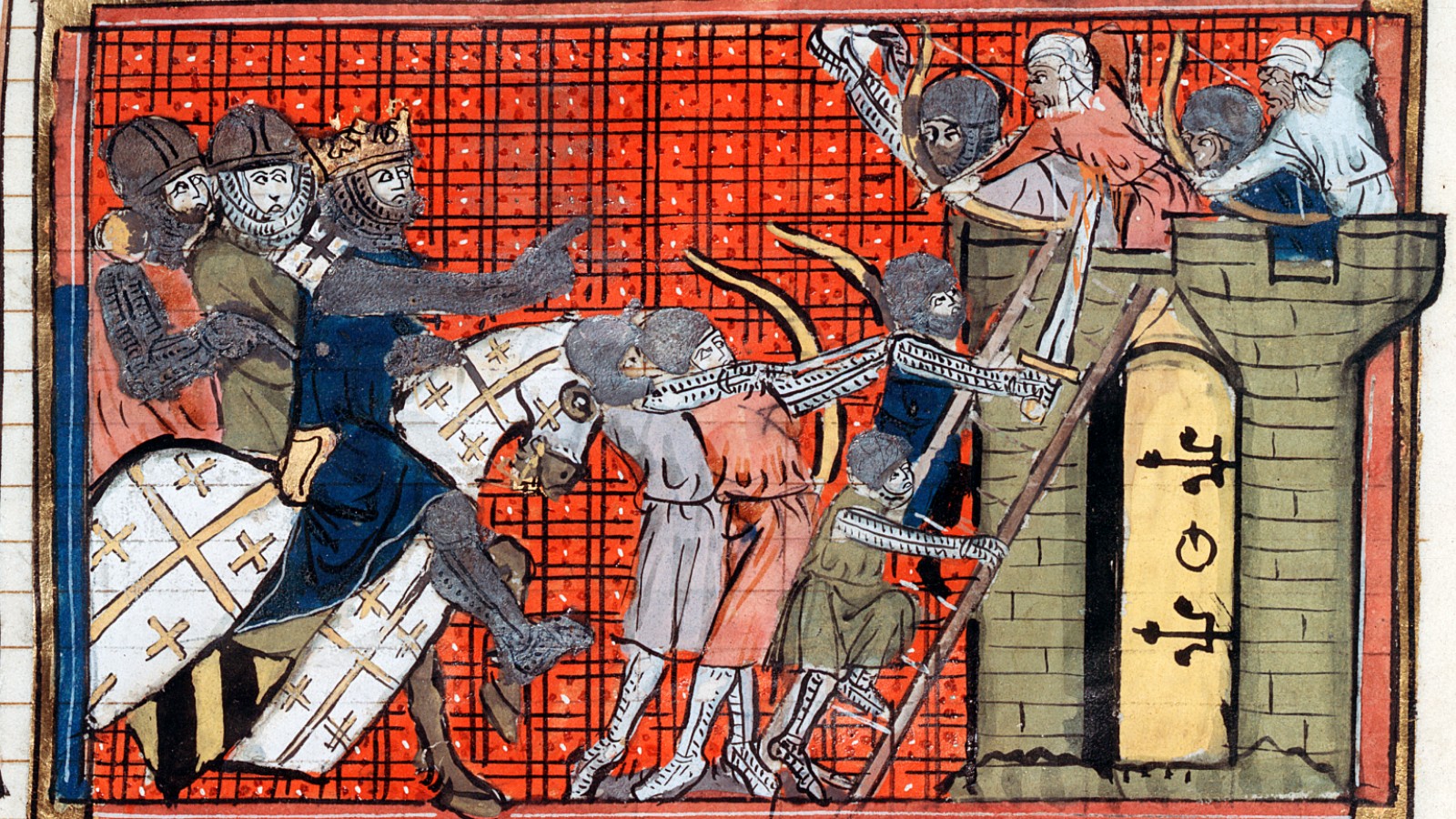
The most famous Crusades were the offset three. The First Crusade was a highly meaning result. "It began the crusading motion and resulted in the conquest of several major towns and cities in the Near East including Edessa, Antioch and Jerusalem," Morton said.
The Second Crusade (1147-1150) was a complicated event that was non confined to the Almost East. "It was a response to the fall of the city of Edessa (the majuscule of the County of Edessa) in 1144 to the Turkish ruler Zangi," Morton wrote. "The cause itself set up out to reconquer Edessa, but it never got anywhere virtually this target and culminated in the unsuccessful siege of Damascus in 1148. The 2nd Cause also included expeditions launched on other frontiers, including campaigns fought in Iberia (Espana and Portugal) and the Baltic region."
Related: The Holy Land: 7 amazing archaeological finds
The Third Crusade (1189-1192) was launched following the dramatic Islamic reconquest of Jerusalem. The pope launched the Tertiary Cause after the Boxing of Hattin, when Muslim ruler Saladin defeated the kingdom of Jerusalem, Morton said. "The papacy responded by raising an enormous new crusade led by rulers — such equally Frederick I of Germany, Philip II of France and Richard I of England (as well called The Lionheart). "By the stop of the Crusade, Jerusalem remained under Saladin's control, merely the crusaders managed to recapture some of the kingdom of Jerusalem's coastal cities," Morton said.
What were the Crusader states?
Following their success in capturing Jerusalem in 1099, the Crusaders established four Roman Catholic realms in the Middle E. Known as the "Crusader states" or "Outremer" (the medieval French term for "overseas"). "They consisted of the County of Edessa, the Principality of Antioch, the Kingdom of Jerusalem and, later on, the County of Tripoli", according to Morton.
Antioch, Edessa and Tripoli covered the areas that are now Syrian arab republic, Lebanon and Southeast Turkey, while Jerusalem encompassed modern-day Israel and Palestine. Although the states were established by Crusaders, the states populations contained only a minority of "Franks" — the Muslim and Eastern Orthodox term for Western Europeans.
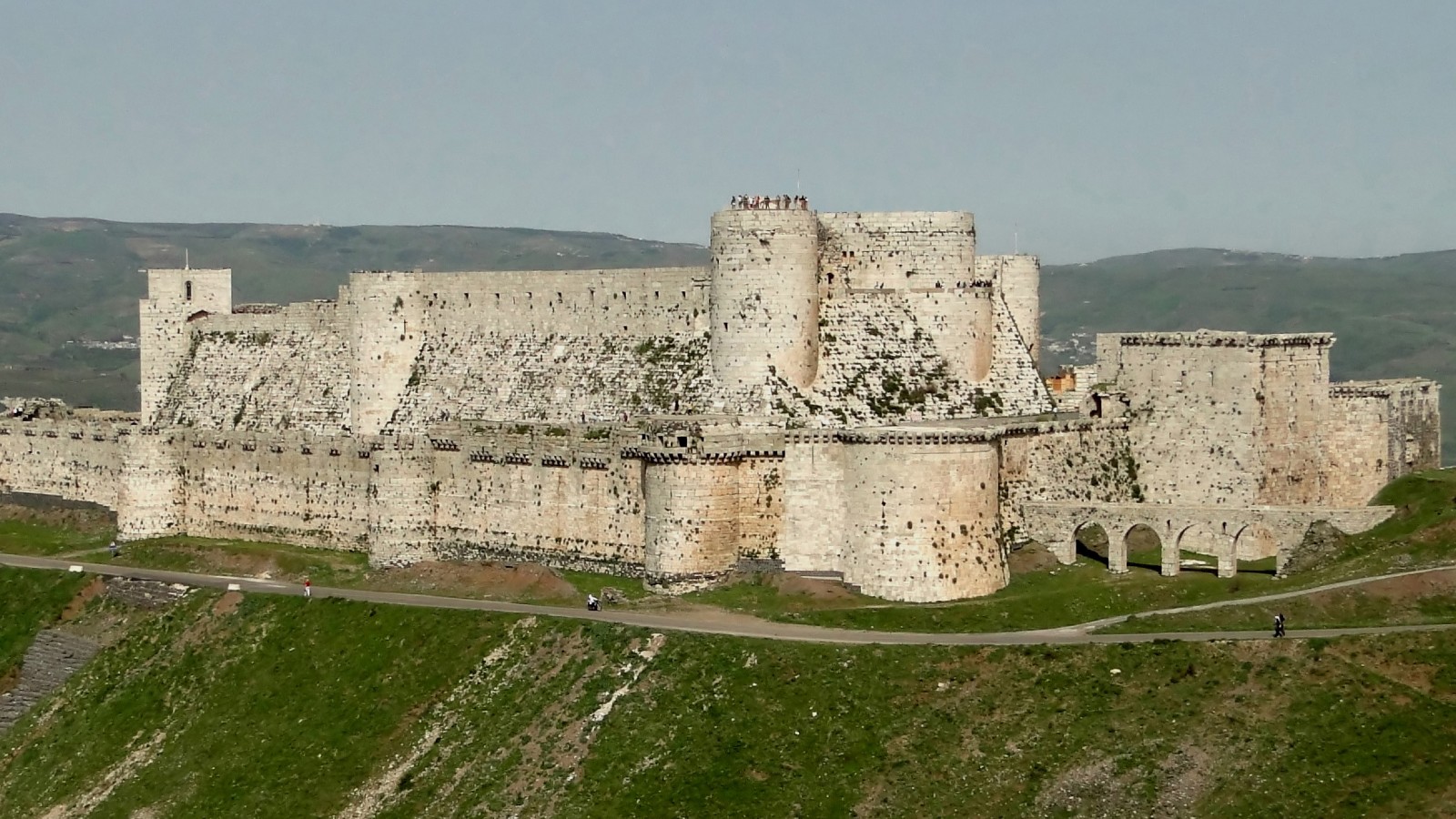
Most people who lived in the states were Ethnic Christians and Muslims who spoke a variety of Eye Eastern languages, Andrew Jotischky wrote in his book "Crusading and the Crusader States" (Routledge: Taylor & Francis, 2014).
Related: Biblical Archaeology: The study of Biblical sites & artifacts
Edessa fell to the Turkish warlord Zangi in 1144, but the other states held out against Muslim forces for many years. In 1268, the Mamluk sultan of Arab republic of egypt at the time, known as Baibars, and his army captured Antioch; so in 1289, the Mamluk sultan Qalawun defeated Tripoli. The city of Jerusalem was captured by Saladin, Sultan of Arab republic of egypt and Syria, in 1187, but the kingdom endured until its substitute capital, Acre, fell in 1291.
Were the Crusades confined to the Near East?
Although the more famous campaigns occurred in the Near E, some Crusades took place in Europe too. These Crusades were launched by ambitious soldiers. Later on the showtime of these religious wars, other commanders tried to go the pope to besides endorse their military endeavors, co-ordinate to Morton. "Inside a few decades, crusading campaigns took place against the Byzantine Empire, in Iberia (Spain and Portugal) and besides in the Baltic region."
Beginning in the 13th century, diverse popes launched Crusades against their opponents within Europe. These wars targeted a wide swath of individuals, including heretics inside Western Christendom and the pope's political opponents, Morton said. As the policies and agenda of the Christian motility evolved, and so did those targeted past the Crusades.
"In this way, crusades took place in many different areas, non just the Eastern Mediterranean, against many dissimilar societies and communities," Morton said. "To a contemporary eye, the journey to Jerusalem e'er retained a special and unique importance."
Children'south Crusade
Although they were primarily military campaigns, medieval Crusades were grounded in Christian religious ambitions. They were frequently spiritual undertakings that could be classified as "Popular" movements, Morton wrote. "Popular" Crusades occurred sporadically across much of the history of the crusading movement," he said.
"They were essentially moments when preachers or enigmatic leaders — often from humble backgrounds — spontaneously gathered crowds, inciting their followers either to join or to initiate a crusading entrada. This was often with niggling or no licence from the papacy."
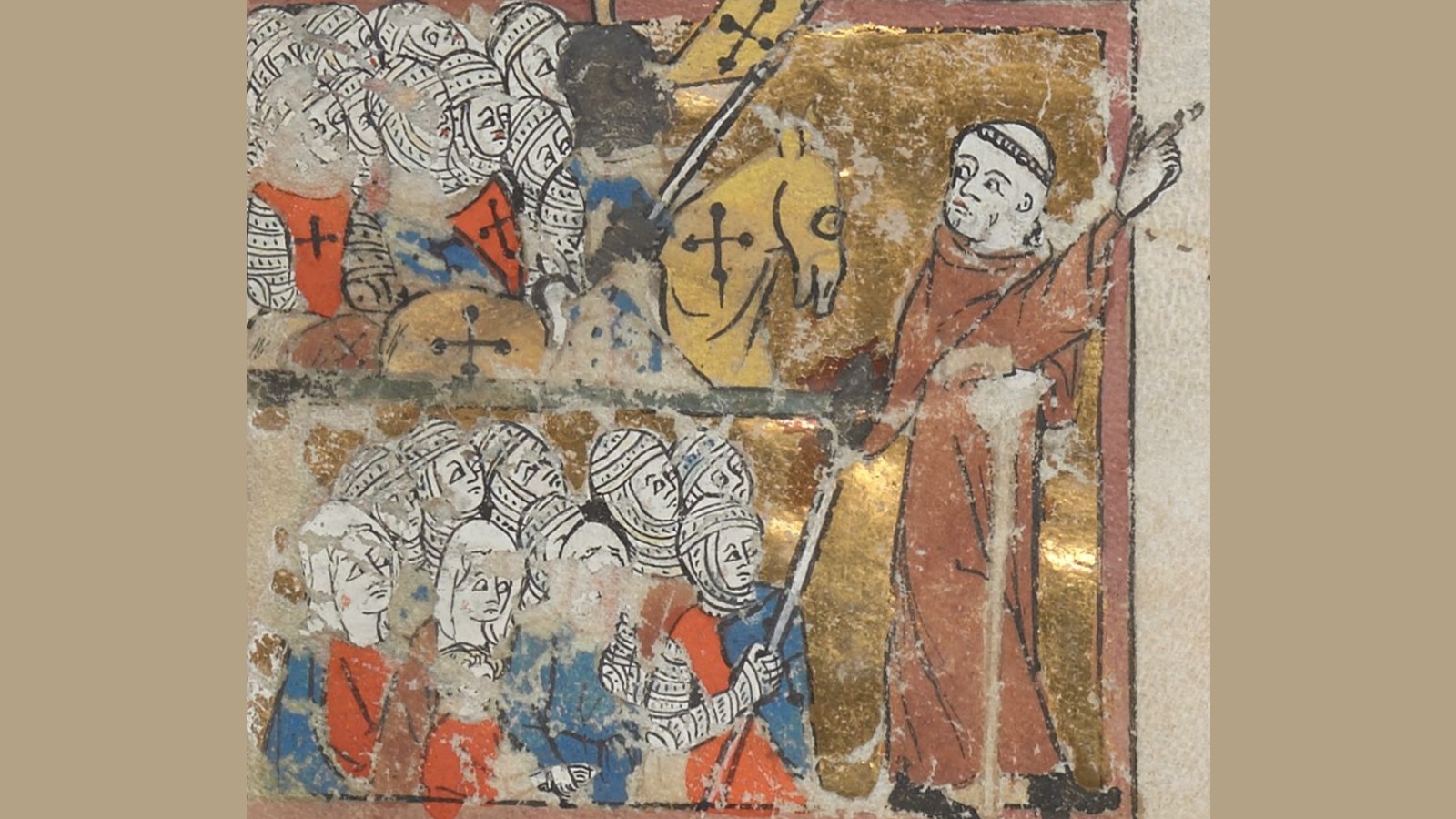
Two of the most famous Popular Crusades were the People's Cause (1096) and the Children'southward Crusade (1212). During the Children'due south Crusade, thousands of immature people from northern French republic marched south toward the Mediterranean coast with the hope — never to be fulfilled — of reaching the Holy Land. The People'due south Cause was the name given to the first office of the First Cause, when a large ground forces raised by Peter the Hermit tried to retake Jerusalem and the rest of the Holy Land from Islamic control.
Related: Ancient Israel: A brief history
The Popular Crusades were unsuccessful. "They scarcely ever reached their intended targets. The Children'southward Crusade never left Western Christendom, and Peter the Hermit's forces suffered an overwhelming defeat as before long as they entered Turkish-ruled Anatolia. Despite the reverses and military failures, these campaigns indicate just how pop crusading became across the social spectrum of Western Christendom."
Later on Crusades
During the 13th century, Crusades to the Near East mostly attempted to retake or retain control of the metropolis of Jerusalem. The most successful of these later on crusaders was Holy Roman Emperor Frederick Two. "Frederick briefly managed to regain Jerusalem in 1229, although it just remained in Frankish (Western European) hands until 1244," Morton said. "In Frederick's case, he sailed directly to the kingdom of Jerusalem and secured the Holy City's return during diplomatic negotiations with the Egyptian sultan."
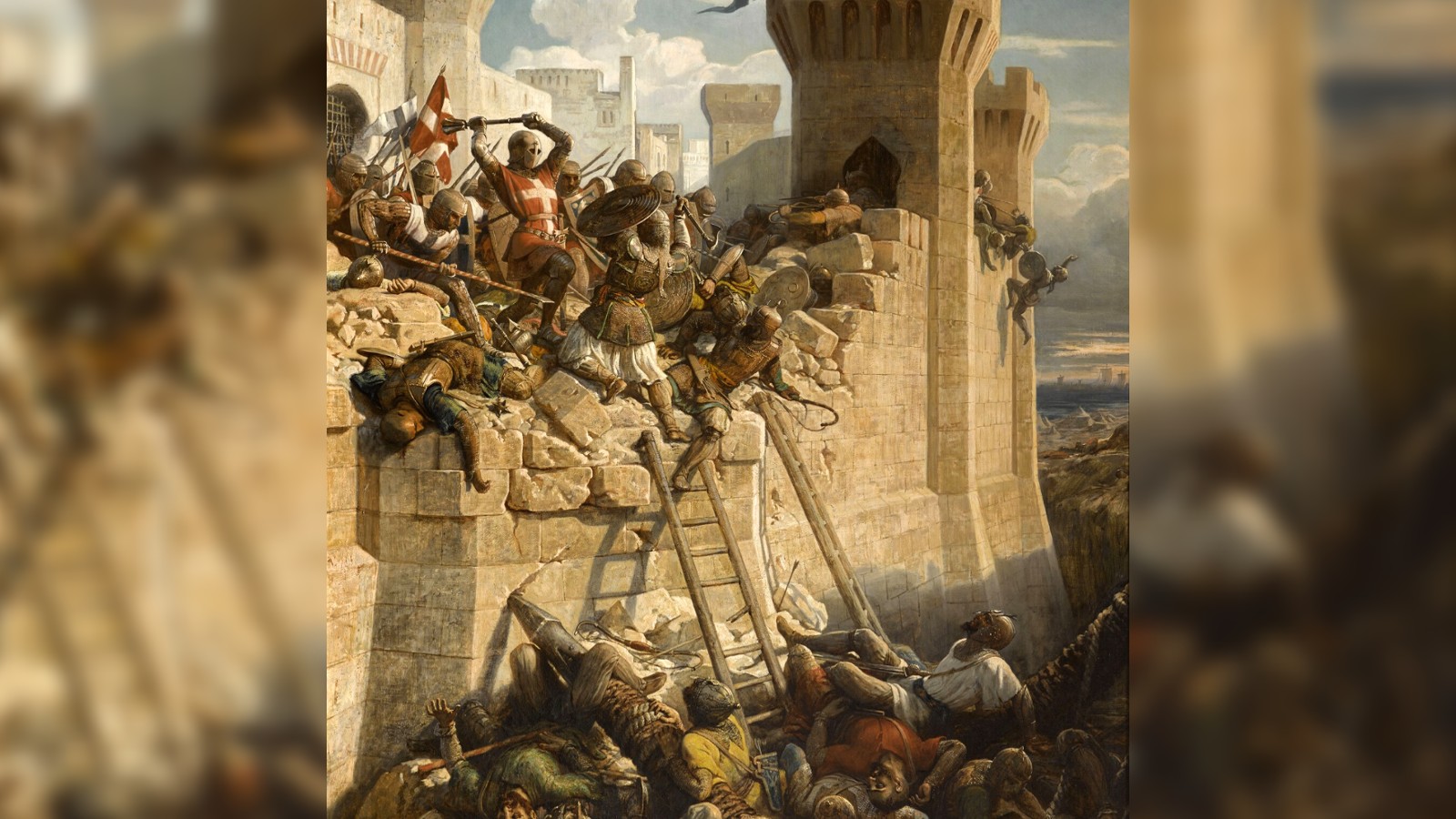
This menstruum also saw Egypt become a crusader battleground. "Two other really large Crusades, the Fifth and the Seventh, attempted to conquer Egypt prior to advancing against Jerusalem. Their plan was to secure the agronomical wealth of the Nile Delta and the revenues of Egypt's mercantile cities," Morton said. "They would and so utilise these resource as a base from which to reach the permanent re-conquest of Jerusalem. Both attempts failed."
Related: What Is the Ark of the Covenant?
Crusading expanded away from the Holy Land during this fourth dimension, with popes attempting to gain tighter command of the various movements. "Perhaps the nearly significant developments in crusading during this century took place in other regions," Morton said. "At the fourth dimension, the pope started Crusades against various opponents in many regions. These included the Albigensian heretics in southern France, the Mongols in Central Eurasia and the pope's political opponents. In addition, the papacy encouraged the broader population to contribute to the crusading either through financial donations, prayer, processions or other religious rites," Morton said.
Legacy of the Crusades
The legacy of the Crusades remains stiff even in the 21st century, according to Morton. "The era of the Crusades to the Holy Land is best known today as 1 of the about conflictual periods in the history of relations betwixt Western Christianity and Islam," he said. "In the pop imagination, these Crusades are thought of as a straightforward conflict between ii opposed religions."
The Crusades were similarly complex during the Middle Ages. "The irony is that, although the Crusades go on to be remembered in this manner in the 21st century, the surviving sources from the medieval period — written by authors from many unlike cultures — tell a dissimilar story," Morton said. "They do contain statements of hatred, violence, massacres, triumphalist incitements to religious war and the defeat of other faiths. However, they also include descriptions of friendships, alliances, statements of respect and admiration that cross cultural and religious boundaries." He added that the "frontiers of war in the Near Due east were very rarely equally clear-cutting as only 'Christian vs Muslim' or 'Muslim vs Christian'."
Such large armed services campaigns and religious movements ultimately influenced other areas of human development in the Near East. For example, they fostered the sharing and creation of new technologies, new forms of fine art and compages, as well as the exchange of different ideas and fifty-fifty cuisines. "The ii worlds — Muslim and Western Christendom — learned a wealth of information about each other," Morton said.
Additional resources
- For an in-depth reassessment of the religious encounter during the Crusades, read "Encountering Islam on the Commencement Cause" (Cambridge Academy Press, 2016), by Nicholas Morton.
- For a armed services perspective on the Crusades, read some other of Morton'southward books, "The Crusader States & Their Neighbours: A Military History, 1099-1187" (Oxford University Press, 2020).
- For a quick introduction to the Crusades, read "The Crusades: A Very Short Introduction" (Oxford University Press, 2005), by Christopher Tyerman
Source: https://www.livescience.com/what-were-the-crusades
0 Response to "Why Did the Crusades Happen Why Did the Crusades Begin Again"
Post a Comment